
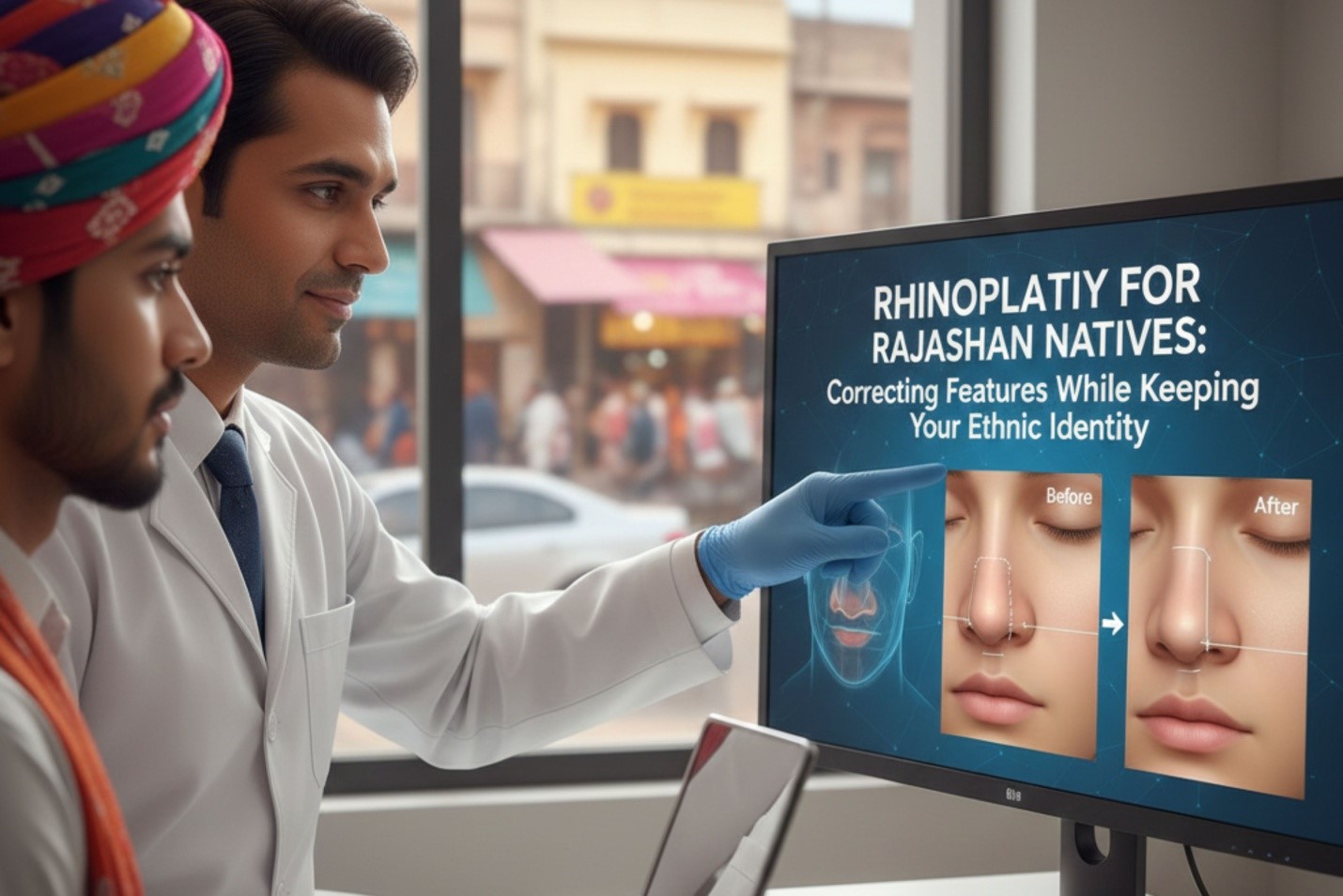
One of the most innovative cosmetic surgery of the modern era is rhinoplasty, but for the people of Rajasthan, it requires a meticulous and culturally aware approach. The goal is to enhance and balance natural features, not destroy identity. When done properly, rhinoplasty surgery improves the balance of the face while preserving each face’s unique ethnicity.
Dr. Saurabh Rawat, a cosmetic and plastic surgeon who practices advanced plastic surgery in Jaipur, believes that any nose reshaping surgery should be respectful of the patient’s culture. This approach should combine creativity, precision, and a deep knowledge of anatomy, regardless of whether the person is seeking structural correction or a more subtle surgery.
This blog explores how Ethnic Rhinoplasty in Jaipur can correct nose problems while preserving the unique personality of the people of Rajasthan.
Understanding Ethnic Features in Rajasthan Natives
The genetic makeup and heritage of a community is often reflected in facial features. Some of the nasal features common among the people of Rajasthan are:
- Large or strong nasal bridge
- Mild to moderate spinal curvature
- Broad nasal base
- Thick skin around the nose
- The skeletal structure of the face is well defined
These features help create a striking and unique appearance. In many cases, the goal of cosmetic nose surgery is to correct, not replace. A nose that is too small or has sharp lines can disrupt the harmony of the face and make it appear unnatural.
What Is Ethnic Rhinoplasty?
Preserving Natural Identity
A unique facial surgery called ethnic rhinoplasty aims to preserve culture and identity while improving appearance and function. Unlike the concept of a “Western nose job,” this technique ensures that the final product looks realistic and proportionate.
The purpose of rhinoplasty among Rajasthani citizens is to:
- Improve symmetry
- Smooth out irregularities
- Refine tip shape
- Enhance breathing function
- Maintain natural facial balance
Ethnic imagery should always be reinforced, not destroyed, with planned nose correction surgery.
Common Reasons for Rhinoplasty in Rajasthan
1. Dorsal Hump Reduction
A noticeable hump on the bridge is a common concern. During rhinoplasty surgery, the hump can be subtly reduced to create a smoother side profile without flattening the natural bridge.
2. Wide Nasal Base
Some individuals feel their nostrils are too wide. Careful base refinement during nose reshaping surgery can improve proportion while keeping ethnic balance intact.
3. Bulbous Nasal Tip
Thicker skin can make the nasal tip appear rounded. Structured support techniques in cosmetic nose surgery help refine definition without making the tip too sharp.
4. Functional Breathing Issues
Patients frequently seek functional rhinoplasty to address breathing issues brought on by nasal blockage or a deviated septum. This preserves aesthetic harmony while enhancing airflow.
Rhinoplasty vs Nose Job: Understanding the Difference
Although the phrase “nose job” is frequently used in colloquial speech, in medicine it refers to rhinoplasty surgery. Although some people think that a nose operation entails drastic cosmetic alterations, contemporary methods have an emphasis on refinement that looks natural.
Today’s rhinoplasty really focuses on equilibrium rather than radical change.
The Importance of Facial Harmony
A key component of facial beauty is the nose. It must work in tandem with facial plastic surgery:
- Chin projection
- Jawline definition
- Lip proportions
- Forehead contour
Strong-featured Rajasthan natives may find an overly short or narrow nose to be out of proportion. Instead than reducing size, skilled cosmetic surgery emphasizes harmony.
Techniques Used in Modern Rhinoplasty
Open Rhinoplasty
Improves the visibility of intricate structural adjustments.
Closed Rhinoplasty
For little changes, incisions are concealed inside the nostrils.
Structural Rhinoplasty
Strengthens nasal support, which is particularly beneficial for people with thick skin.
Anatomy, the intended result, and whether the goal is useful or esthetic all influence the approach that is selected.
Maintaining Ethnic Identity During Nose Correction Surgery
“Will I still look like myself?” is the main question that patients ask themselves.
Surgical experience and preparation will determine the response. Subtle adjustments made during nose correction surgery frequently result in significant improvements without any visible surgical scars.
Examples include:
- Bridge smoothing slightly rather than completely flattening
- Using gentle tip refining rather than forceful narrowing
- Balanced remodeling of the nostrils as opposed to drastic decrease
This method guarantees that the results appear natural in both profile and front perspectives.
Functional Rhinoplasty: Beyond Aesthetics
Many individuals desire functional rhinoplasty to enhance their breathing in addition to their beauty. Structural correction is beneficial for:
- Deviated septum
- Nasal valve collapse
- Chronic nasal blockage
Better long-term satisfaction is ensured when functional and aesthetic goals are combined.
Consultation and Personalized Planning
A thorough consultation is necessary prior to having rhinoplasty surgery. In the course of the evaluation:
- Analysis of facial dimensions is done
- Skin thickness is measured
- Examined are the internal nasal structures
- The objectives are explained in detail
Patients may benefit from using digital imaging to better comprehend possible consequences. To get the desired results, the patient and the cosmetic and plastic surgeon must communicate clearly.
Recovery After Rhinoplasty
First Week
- Mild swelling and bruising
- Nasal splint support
- Limited physical activity
2–4 Weeks
- Significant reduction in swelling
- Return to normal routine
3–6 Months
- Nose shape continues refining
1 Year
- Final results become fully visible
For patients with thicker skin, patience is especially crucial because the final definition takes time to emerge.
Why Choosing the Right Surgeon Matters
One of the trickiest plastic surgery in Jaipur and the entire world is rhinoplasty. Both breathing and appearance can be impacted by minor errors in judgment.
Choosing a skilled cosmetic & plastic surgeon guarantees:
- Maintaining ethnic identity
- Structural stability
- Natural proportions
- Safe surgical standards
Successful results depend heavily on experience and creative judgment.
Psychological and Cultural Sensitivity
In Rajasthan, family resemblance and cultural pride are frequently conveyed through face traits. Having a rhinoplasty should be a personal choice driven by self-assurance and fulfillment rather than peer pressure.
With careful application, a sophisticated nose can boost self-esteem without sacrificing heritage.
Conclusion:
For Rajasthanis, rhinoplasty is about improvement rather than change. Enhancing face harmony while honoring ethnic identity is possible with a well-thought-out nose reshaping procedure. The goal is always the same whether functional rhinoplasty is used to address respiratory problems or cosmetic concerns: balanced, natural results.
Rhinoplasty is a fusion of art, science, and accuracy under the direction of Dr. Sourabh Rawat, a reputable plastic surgeon in Jaipur. This sophisticated type of cosmetic nose surgery, when performed properly, enhances your characteristics while guaranteeing that you still look like yourself, albeit with greater self-assurance.
Book your personalized rhinoplasty consultation with Dr. Sourabh Rawat, Cosmetic & Plastic Surgeon, at the Institute of Plastic Surgery, Jaipur today — and take the first step toward refined, natural-looking confidence.